
Reflecting on Space Resources
And my first question for founders in the field

A subscriber recently reached out to me to ask what I thought about Varda Space Industries. It’s a fascinating firm, doing some really exciting things.
In the company’s own words, Varda is a “microgravity-enabled life sciences company that processes materials in orbit and returns them to Earth“. In plain English, the firm wants to make pharmaceuticals in space. This will require a lot of different things to go right across a lot of different technical disciplines to eventually make a lot of money.
An El Segundo-based company, Varda is notable for having flown the first vertically integrated pharmaceutical manufacturing satellite and return vehicle during its W-4 mission.
While Varda’s core business at the moment is pharmaceutical manufacturing, orbital and reentry flight operations are on the critical path to each batch of product’s market access.
Flying satellites is a frequently solved problem; teams of undergraduate students figure out how to do it several times a year.
While reentry is also a solved engineering problem, it gets solved much less often. This is because returning things from space is expensive, requires rare non-recurring engineering, and is potentially dangerous — and also requires everything to go right while in space.
I’m tracking three companies in the US that have recently launched commercial reentry vehicles to orbit:
SpaceX has flown something like 50 reentry missions — but is playing by very different rules because its north star is human spaceflight
Varda has launched and recovered five reentry vehicles
Inversion Space has launched one but didn’t bring it back — and is now developing a new design called Arc

More than launch, reentry services are the biggest bottleneck in space-to-ground supply chains today.
I write Molding Moonshots in a personal capacity.
If you are building in deep tech and thinking about raising pre-seed, seed, or Series A funding, I’d be more than happy to have a chat on professional terms!
Send me an email and we’ll find a time.
Resource Extraction
That doesn’t mean everything that has to happen in space is totally solved, but we’ve made a lot of progress on resource extraction in particular since the dawn of the space age.
In particular, engineers and scientists have worked together to develop surface sampling tools that have operated in environments with varying levels of gravity and atmospheric pressure.
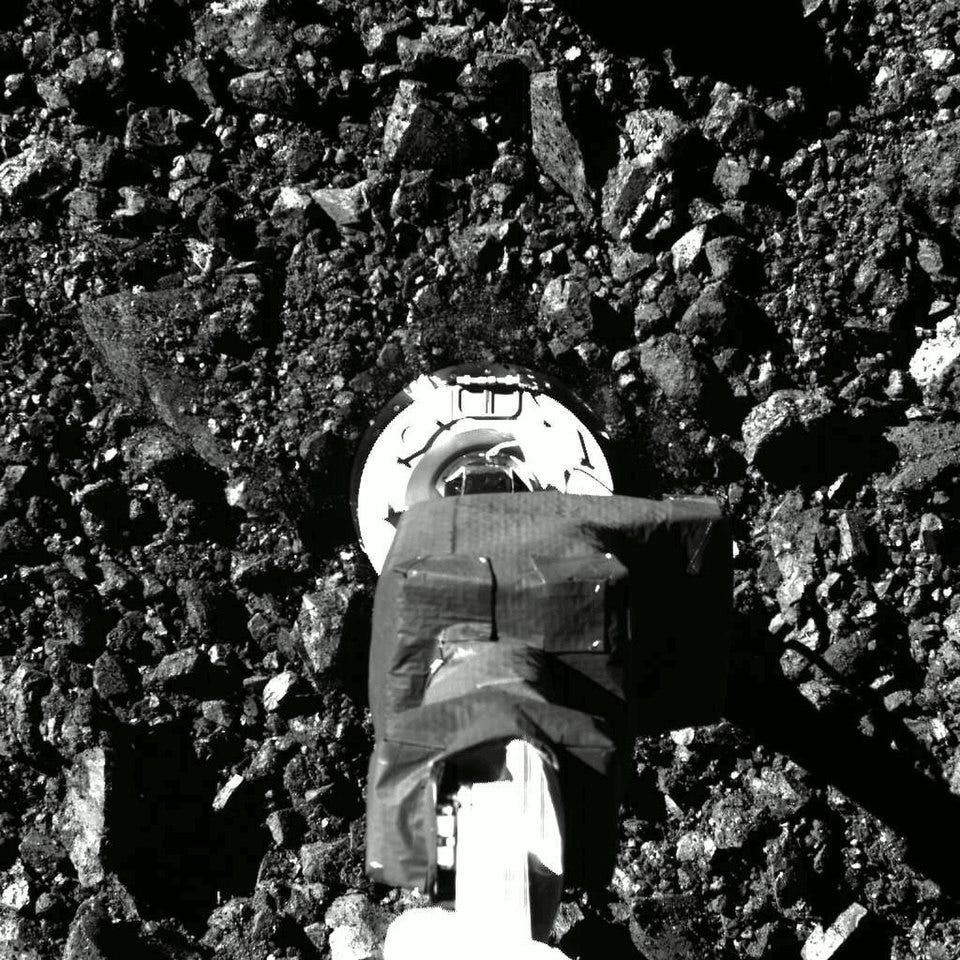
Of course, taking a couple dozen surface samples over the course of a mission for scientific research doesn’t come close to approaching commercial volumes — but the basic technology to extract resources from other bodies in the solar system exists as a minimum viable product.
Over the next few years, startups will probably start working through what it means to accomplish this at industrial scale, taking a scientific procedure and turning it into an engineering process.
This space mining is desirable for two reasons.
First, other celestial bodies have a different regulatory regime around mining than Earth. The short version of this is that a shocking amount of space law comes from diplomatic agreements, particularly two Cold War-era arms control treaties: the Outer Space Treaty and the Moon Treaty.
These are more focused on nuclear non-proliferation and freedom of use. As a result, they doesn’t really speak to environmental protection, private land ownership, and labor relations issues that constrain terrestrial mining operations. What they do do is deny sovereignty to state parties, which seems like it would complicate most applications of Earth mining law.
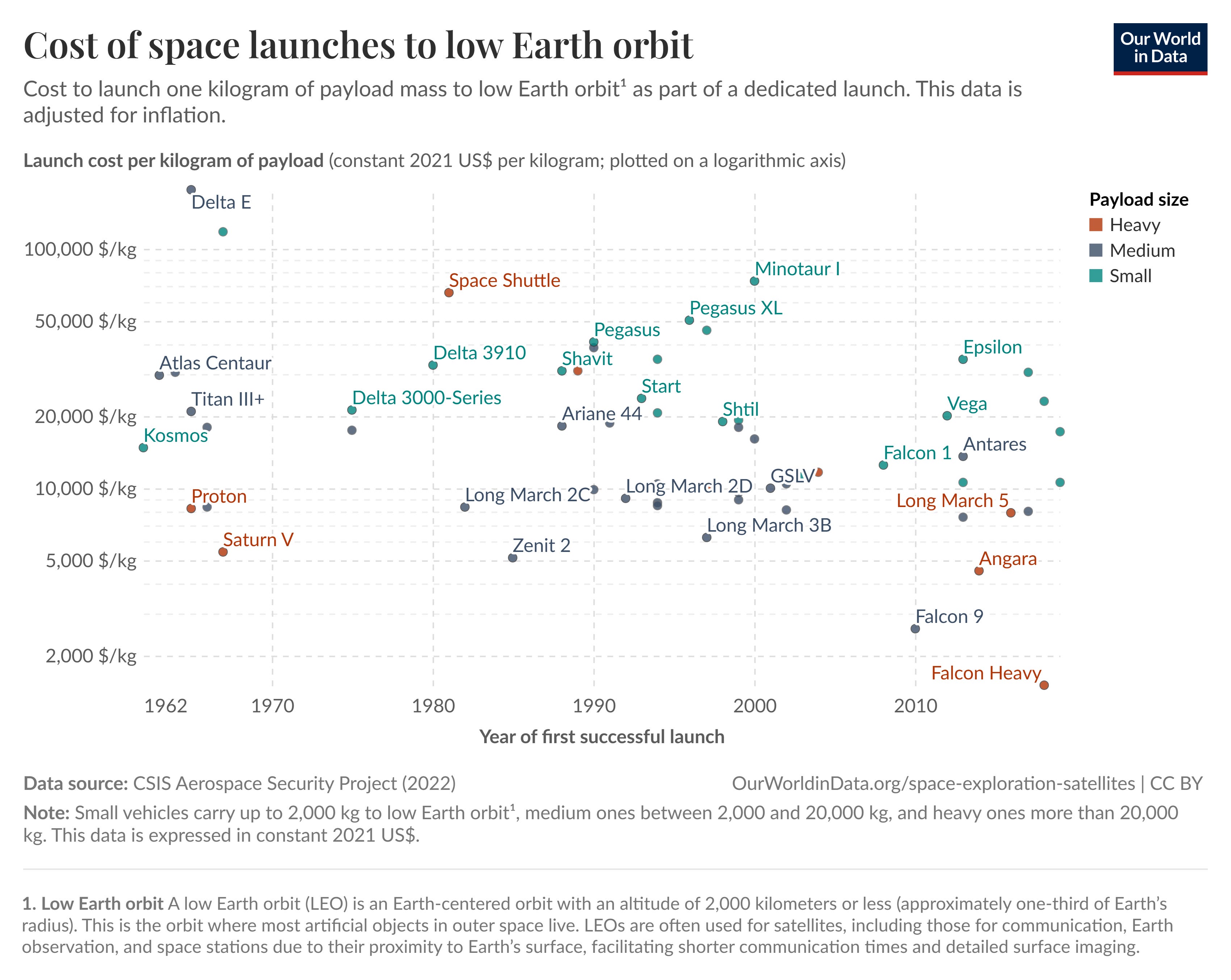
Second, shipping anything to space is expensive. Today we measure costs in thousands of dollars per kilogram; we may eventually get to the tens of dollars per kilogram, or pay by volume. In any case, if it’s possible to find raw materials at the destination and processes them there, it could drive material mass (and therefore probably cost) savings.
Just because we can take part of the surface doesn’t imply we can access where the materials we want are. I expect companies will need to develop new surface exploration and mining techniques to access unexplored regions of moons, planets, and asteroids.
The next step is isolating useful materials from the recovered resources.
We have yet to demonstrate resource separation techniques in space at any sort of scale. I anticipate this will vary on a case-by-case basis.
I also suspect that this is something operators will want to do as close to the resource extraction site as possible, because removing non-value-add mass from the payload will enable either a smaller payload or more value-add mass.
Resource Utilization
If humanity commits to off-world mining, it then has to grapple with the question of where to use the mined products. There are essentially two umbrellas of options:
bring the material back to Earth
use it in space
Bringing the material back to Earth gets back to the reentry question where I started.
Setting aside the technical issues, it also might wind up forcing humanity to confront more fundamental questions about economics. For example, the asteroid Psyche (which has an irregular shape that makes its size hard to explain but has a surface area of about 64,000 square miles) is thought to be 30-60% metal by mass.
If even 1% of that was returned to Earth as a commercially useful ore or refined metal, it would create a supply shock in the metals returned to Earth.
Using the resources in space could involve applications on the celestial body where it is mined, or moving the material to other parts of the solar system. This approach seems less well-developed, but potentially also less disruptive to Earth. That makes it attractive to me, and something I’d like to dig into more.
Deciding where to use the space resources is perhaps the most essential domain-specific question for founders.
The answer will drive the role the firm plays in the market, its vendors, its customers, its end users, its timing, its core technologies, and its moat.
Who am I watching today?
There are three startups I’m particularly excited about in the space resources space.
First is Varda. To me, the startup’s life sciences manufacturing missions represent the near-to-mid-term potential of the space resource economy.
Second, Astroforge is an asteroid mining startup pursuing platinum group metals, initially on the asteroid 2022 OB5. Its thesis is that mining off-world will avoid environmental damage on Earth, and it will also eventually have a lower cost per ton of metal extraction than the terrestrial state of the art. The startup has struggled with technical challenges during its first two missions.
Finally, Galactic Resource Utilization, or GRU Space, has an immediate vision somewhat closer to home. This startup, currently in Y Combinator, is working towards building a lunar hotel.


The first step to this, according to the startup’s white paper, is using in-situ resource utilization to build structures out of regolith.
While the timeline strikes me as ambitious for a human-rated space structure, I’m impressed by the GRU Space’s strong views on resource utilization, and its perspective that the Moon must be the first stop for humanity as a spacefaring civilization. The vision is audacious; I’ve heard of startups talking about becoming a Kardashev Type II civilization before, but this one is the first I’ve seen claim to be paving the road to Kardashev Type III.
If there’s other startups I should be following working on space resource collection or applications, please let me know in the comments.
The diversity of strategies here is the point. There’s not yet technical consensus, let alone economic consensus, on the best way to engage with space resources.
I don’t know if we’ll see either one emerge over the coming decade, but we’re definitely going to see some exciting experiments!
Oh, we actually visited Varda space when I took that trip to El Segundo recently. Lots of the MBAs on the trip and I agreed that we were surprised how credible this company’s business model was