
Shield AI bought Aechelon
A UAV scaleup vertically integrates its software

This week has been SF Deep Tech Week, and I’ve spent it running all over San Francisco and Alameda to attend events for work and learn about new developments happening in AI, defense, space, power generation, power storage, and other topics in bleeding edge engineering. I’ve had a great time!
Stepping back a bit, this week needs to happen. San Francisco is the startup financing capital of the world, and deep tech is a popular sector right now. But anybody who thinks great companies are being built only in the Bay Area is sorely mistaken; there are major deep tech developments happening every week all over the country.
For example, earlier this week, Shield AI completed its acquisition of Aechelon Technology from Sagewind Capital; the deal was first announced in early March.
Shield AI
What does it do?
Shield AI is a San Diego-based vendor of Unmanned Aerial Vehicles and related systems.
The core, practically airframe-agnostic, autonomy product is called Hivemind, and it’s got substantial enough flight heritage that it won a massive contract for the Collaborative Combat Aircraft (CCA) last week.
The electro-optical and infrared mission services offering is called, naturally, Vision Systems. In the firm’s own words, it is a “portfolio of proprietary computer vision hardware and software that turns EO/IR sensor data into real-time detection, tracking, and situational awareness at the edge”. This is the group of technologies that take an autonomous aircraft and turn it into a sensor with the capability to detect militarily significant targets.
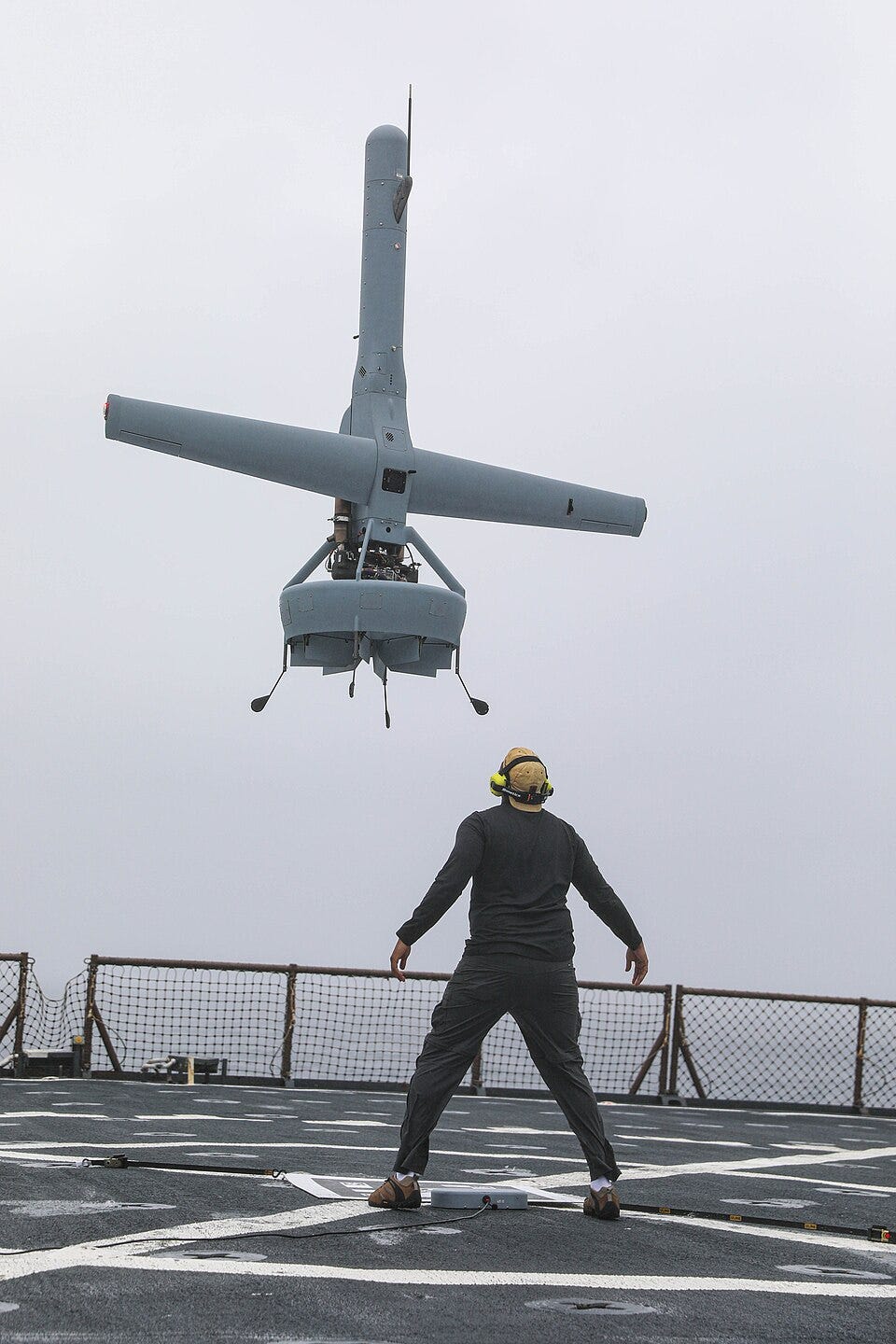
V-BAT is the firm’s first UAV. It’s a Group 3 drone that can take off and land from a 15x15ft square anywhere in the world—including a ship.
X-BAT is the firm’s next-generation UAV, with much better performance than V-BAT.
I write Molding Moonshots in a personal capacity.
If you are building in deep tech and thinking about raising Pre-seed, Seed, or Series A funding, I’d be more than happy to have a chat on professional terms, as an investor at MFV Partners!
Send me an email and we’ll find a time.
Technical Progress
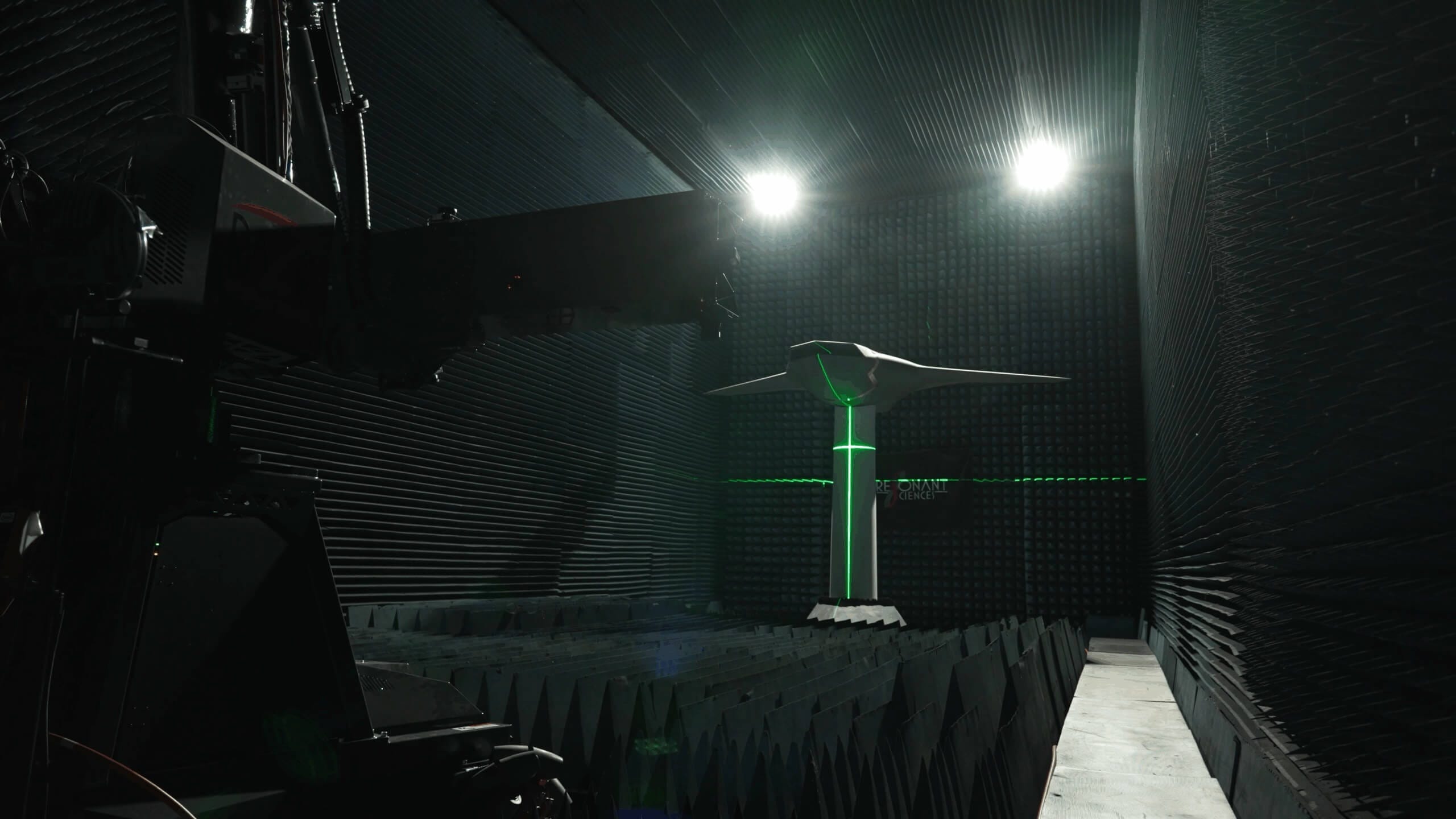
X-BAT is in late-stage testing. The first flight is scheduled for later this year.
V-BAT is operational throughout the US Department of Defense, as well as with the militaries of Brazil, Greece, Indonesia, Japan, the Netherlands, and Romania. Additionally, Argentina, Armenia, and India have placed orders for the system.

Fundraising History
Dorm Room Fund and Founders Collective led early investments into the startup, though precise information about terms was not available.
In April 2017, Shield AI announced a $10.5M Series A led by a16z.
Series B information was not available.
In February 2021, Shield shared its $90M Series C led by Point72 Ventures.
In August 2021, it announced a Series D led by Disruptive, raising $210M in equity.
In June 2022, it raised a Series E led by Snowpoint Ventures, selling $90M worth of equity on a $2.3B valuation.
In October 2023, it closed a Series F led by the US Innovative Technology Fund, securing $200M on $2.7B post-money.
In March 2026, the firm raised a Series G led by Advent and JPMorganChase, raising $1.5B on $12.7B post-money.
Aechelon Technology
What does it do?
Aechelon creates synthetic reality to train both humans and machines.
The firm offers products in image and data generation for synthetic reality, geographic sensor databases for synthetic reality, a radar toolkit for ISTAR applications, Skybeam updates to databases, and secured data storage.
It also provides more comprehensive solutions for flight simulation and training, geography-specific visualization for ISTAR, AI and ML training for navigation and ISTAR, and Project Orbion—”a living synthesis of real-time satellite imagery, radar intelligence, video photogrammetry and AI all combined with the most accurate rendition of the Earth, reconstructing and distributing our world in dynamic 3D”.
Technical Progress
Aechelon has mature products.
In 2024, the firm recorded about $11M in unclassified prime contracts over the prior 12 months, almost all of which came from the US Navy.
The contract values must have grown rapidly since then, or be mostly on the “high side” (classified programs), because in 2025 the company was named to the NatSec100.
Where do great defense startups go?

The Silicon Valley Defense Group (SVDG) published its 2026 NatSec100 list last week. It tracks “the top 100 venture/PE-backed American defense companies that are innovating, building, and delivering warfighting capabilities”.
Aechelon’s customers today include organizations throughout the US Department of Defense, as well as allied nations flying military hardware with US origins, the German Air Force, and the Italian Navy.
Fundraising History
The company was started in 1998, and headquartered in San Francisco.
Sagewind Capital, a government technology focused buyout firm, purchased Aechelon in November 2024 as a platform investment.
The ownership structure before this acquisition was not clear. The company is still led by CEO and cofounder Nacho Sanz-Pastor, and by CSO and cofounder Javier Castellar.
Acquisition Analysis
Technical Perspective
The CCA award is a pivotal moment not just for Shield AI, but for the broader UAV industry. Its software awards for mission systems indicate a desire on the part of the US Department of Defense to decouple different layers of software in the mission stack from each other. Just because it buys a UAV (with flight control software) from Startup A, doesn’t necessarily mean A has the best mission planning software, tactical decision-making software, payload-specific software, or data analysis software.
The simplest way to think about this transaction is Shield AI anticipating this change in policy, and getting ahead of it by buying a leading software vendor at a point in the mission workflow where its products are not competitive.
The acquirer is trending towards vertical integration in its core product line, and the transaction shows its view that inorganic growth is the best approach. This makes a lot of sense given my understanding of how government procurement works—having executed a prior, relevant contract is a massive leg up when competing for the next one.
I think there’s also a story to tell about physical AI in this deal. Aechelon’s visual simulation and synthetic environment are just the sort of simulated data that’s become wildly popular among AI hardware companies, and Shield AI’s core product is an AI operator for drones. Consequently I would expect that from an R&D point of view, the core value-add of this technology is going to be improving Hivemind by training it better, or perhaps replacing it outright with agents that are trained on Aechelon’s technology.
The last thing this shows about the technology is that Shield AI probably intends to remain an uncrewed system-focused neoprime. Aechelon is aligned specifically with opportunities in aviation space, and Shield AI has so far only announced major programs in the UAV space. However, just yesterday the startup put out a piece about how the Hivemind software suite has applications to uncrewed surface vehicles (USVs) as well, so this may change in the near future.
Financial Perspective
This is a kind of funny transaction from a financial lens. Normally PE-owned firms buy VC-backed startups, not the other way around!
Shield AI’s press release does not say anything about the transaction price, except that it was tied to a $2B strategic financing package that included the $1.5B Series G.
The price had to have been interesting enough for a PE shop to sell after a holding period of about 1.5 years, specifically because that is less than the 3 year period required to qualify carried interest for long-term capital gains tax rates. This short holding period implies to me that Sagewind’s investment either went swimmingly (so they were happy to pay the increased tax rate), or went so poorly that there was no carried interest to worry about. Based on its inclusion in a NatSec100 list for the first time during the holding period, I suspect it’s the former rather than the latter, and that the purchase price was at least $1B.