
Long Wall's announcement
Is this the end of defense hardware rationalization?

Earlier this week, Long Wall (formerly ABL Space Systems) shared more details about Cyclops, its new ballistic missile defense (BMD) system.
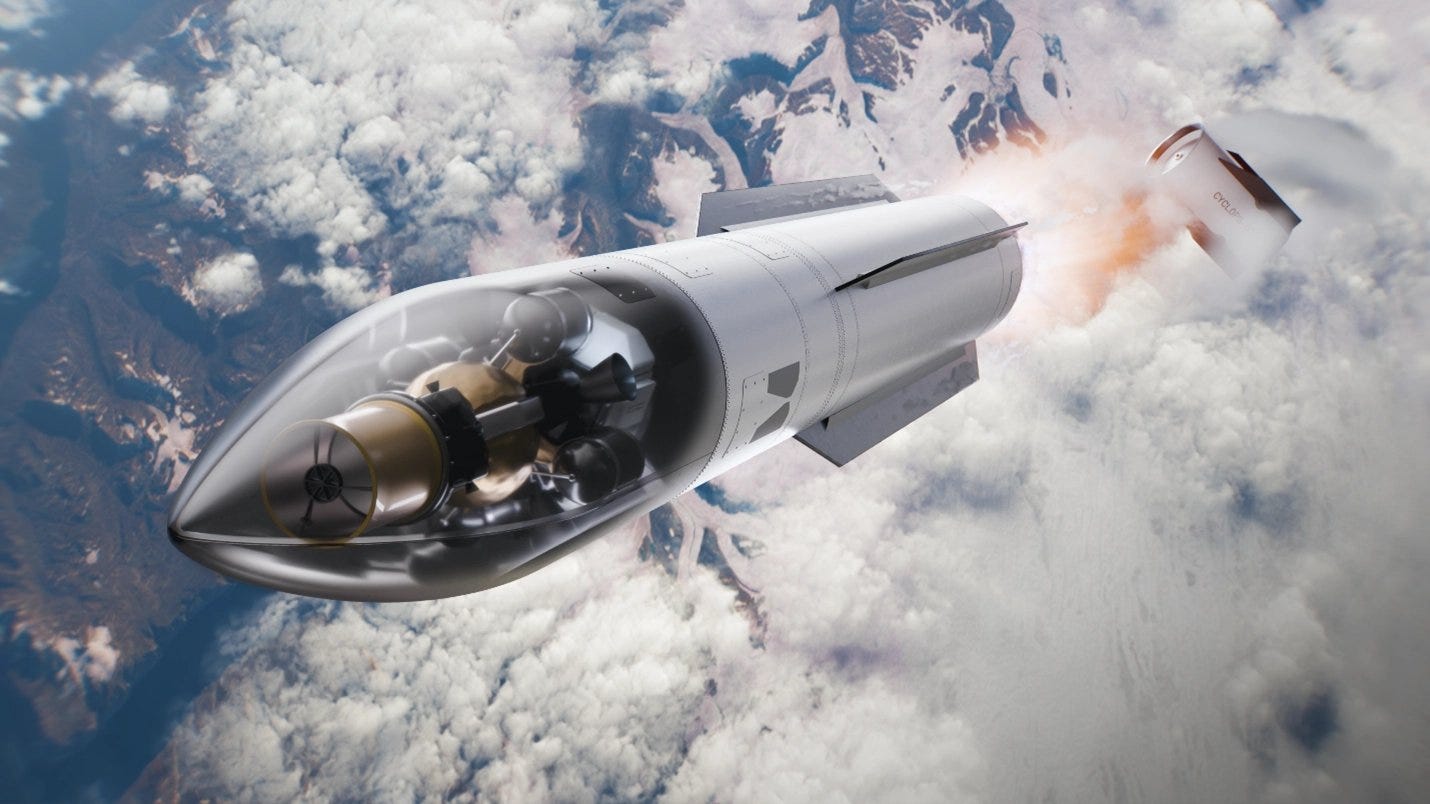
The firm explained the vision for the product in this blog post. In short:
Ballistic missile threats are proliferating, and can be deterred with effective BMD
Effective BMD requires mass-produced missile interceptors and exoatmospheric kill vehicles
Effective BMD requires a distributed and layered defense
Effective BMD requires faster and cheaper production processes and tests
Cyclops will be Long Wall’s flagship product that meets these doctrinal specifications
The technology Long Wall intends to develop would duplicate, and perhaps improve upon, existing technology. This would increase America’s BMD magazine capacity, but it’s not clear from the post that this will add new new capability.
I write Molding Moonshots in a personal capacity.
If you are building in deep tech and thinking about raising pre-seed, seed, or Series A funding, I’d be more than happy to have a chat on professional terms!
Send me an email and we’ll find a time.
A Short Note on Long Wall
Long Wall is the rebrand of ABL Space Systems, which was founded in 2017 to build deployable launch vehicles and infrastructure.
The firm raised more than $500 million, up through a Series C fundraise. However, it experienced significant operational issues during the development campaign of the RS1 rocket. In 2022, a hard start destroyed the second stage of an RS1 rocket. After three aborted launch attempts in December 2022, the firm attempted a launch in January 2023, which failed shortly after launch due to premature engine shutdown. A second launch attempt was cancelled during the summer of 2024 after a fire at the launch pad following a static fire test irreparably damaged the vehicle.
In late 2024, the firm raised what PitchBook calls a Series A, which suggests a recapitalization or down round.1
In February 2025, CEO Dan Piemont announced the firm would rebrand to Long Wall, and pivot from orbital launch systems to hypersonic flight testing and missile defense.
My thoughts on Long Wall’s idea
I share Long Wall’s concern about ballistic missile proliferation, and agree that there exists a critical need for a BMD interceptor in much higher quantities than exist today.
The issue has become a personal one. I have friends and family in Israel who lived through the missile strikes of the Twelve Day War earlier this year. A dear friend had PhD research disrupted by a strike on the Weizmann Institute of Science.
I am thoroughly unconvinced that a defensive BMD system (which as I understand it has practically no offensive capacity) will ever deter an adversary. I cannot understand why the presence of some defense system should keep a potential adversary from attacking. It should probably cause them to change the attack strategy, but it shouldn’t stop the attack.
If you’ve got a view on why BMD could deter a strike, please let me know in a comment.
As Long Wall’s essay points out, missile raid sizes have increased over the past few years (countries are launching more missiles at once to attack targets), and raid sizes can increase more to address expected in-flight attrition. At best, BMD architectures will serve as a “hard counter” to specific raids or portions of them — but even this may not be the case, as defense hardware with 100% reliability is practically unheard of. At worst, a large BMD network could impose unacceptably high financial costs on the operator, if the ballistic missile targets are cheaper than the interceptors.
Mass production of interceptors and supporting technologies (radar, engagement command post, kill vehicles, transportation) is absolutely the core of a missile defense network. I think Long Wall’s right about this — and I don’t see anybody really making a counter argument. This applies both to interceptor rockets, and exoatmospheric kill vehicles, which are supposed to destroy ballistic missiles outside the atmosphere by hitting them (as opposed to hitting them with fragments of an explosive warhead, which is the usual payload of a missile which targets aircraft).
It’s interesting to me that Long Wall believes so strongly in the hit-to-kill exoatmospheric kill vehicle, and that’s where the firm is focusing its efforts. I am somewhat skeptical of this, though I suppose it might be useful if the firm is worried about a post-boost vehicle with maneuvering capabilities. The worst-case outcome a hit-to-kill system avoids would be that an explosive interceptor detonates, and then the target maneuvers around the warhead fragments, avoiding destruction. Depending on what sort of missile trajectories Cyclops is meant to defend against, an exploding kill vehicle could potentially create debris risks to satellites.
I am the same page as the firm about why a layered defense is necessary. At sufficient scale, no BMD system is going to destroy all its targets with its first salvo, and so it is desirable to have the ability to take multiple shots at a target ballistic missile if necessary.
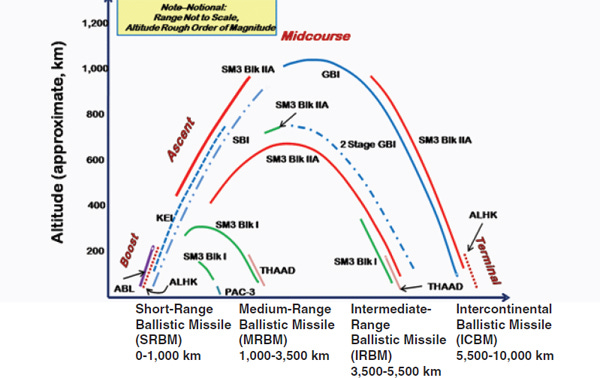
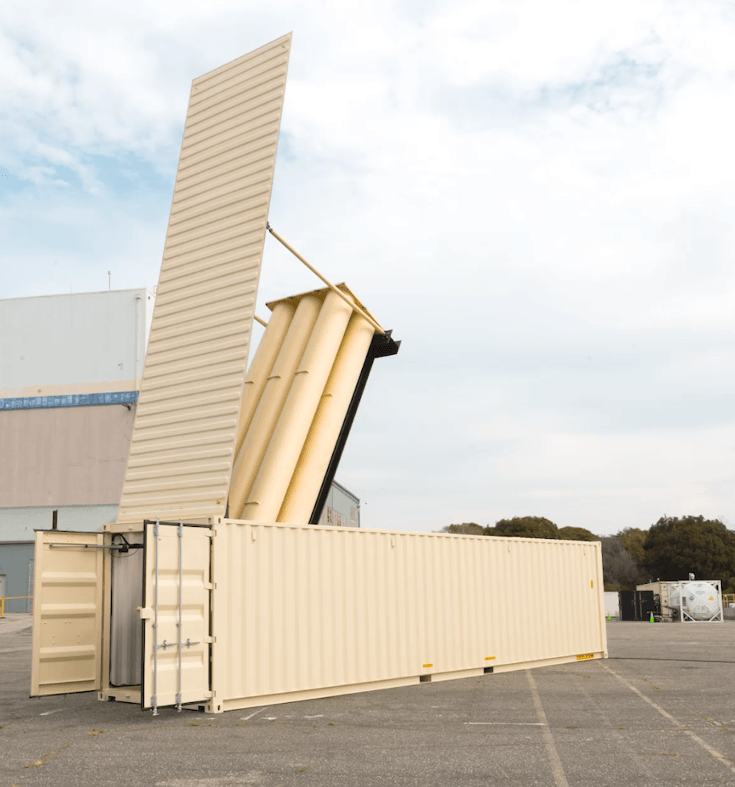
The need for distributed defense is also quite clear. Overconcentration of critical defense technologies in a geographic area will make that space a key target for other types of attacks. We saw that this week when the Ukrainian SBU blew up a Russian submarine in a key Black Sea port, using an Uncrewed Underwater Vehicle to evade Russian defensive barriers. Long Wall is addressing this by “containerizing” the launcher, storing Cyclops missiles in a shipping container which could be deployed via truck, ship, or aircraft to rest directly on unprepared surfaces.
Central to Long Wall’s thesis is both a rapid manufacturing process to scale up the system to production volumes in excess of 100/year quickly, as well as a fast test plan — enabled by the RSX test vehicle, which seems to be a rebranded RS1.
This manufacturing vision is exciting.
This test vision is concerning. BMD is something where failure is perhaps inevitable, but needs to be avoided as much as possible because of potentially catastrophic strategic consequences of missile impacts. I don’t feel I’m exaggerating when I say that if Cyclops fails like RS1 did, hundreds of thousands of casualties could result. As a result, Long Wall’s flight heritage is not particularly inspiring.
The idea of using RS1 as a target is interesting — and I don’t know enough about its performance limitations to have an informed view as to whether or not it could be a realistic target. While this sounds like a great idea to accelerate development test timelines, I hope qualification and acceptance tests at least consider using external hardware, and in any case mention the rationale for the choice to the public.
What is Long Wall doing at a macro level?
Since the Cold War, the US DoD has pursued a policy of services using the same equipment where possible, and not fielding multiple systems to accomplish a single task. This approach has had mixed results, and the most famous recent example of it is the F-35.
This trend of rationalizing hardware in the defense sector lowers personnel costs (multiple services can train personnel at one school), lowers equipment costs, simplifies supply chains, improves efficiency, and potentially improves operational readiness. All this lowers the burden on taxpayers. It also puts firms out of business.
Long Wall’s overarching thesis here is that the need to improve BMD in the US is so intense that DoD will be willing to compromise on the added costs imposed by maintaining multiple systems.
I am inclined to agree that the cost is worth it, particularly because of the growing role BMD is playing in both tactical and strategic engagements in modern conflicts. If legacy contractors cannot produce the number of interceptors needed, and startups can while meeting the same exacting quality standards, then startups should be allowed to contribute their BMD systems to the network.
The first bigger question here is whether BMD is a special case, or this is going to be a change in the Department of Defense’s procurement strategy. Based on how it’s buying space and drone technologies, I’m leaning towards the later.
The second bigger question is if I think Long Wall is the right team to tackle the project, given their engineering troubles over the past few years. Since part of the reason it’s worth it here is because the mission is so important, it strikes me as not particularly intuitive for this team which has struggled to get to orbit to work on it. There’s likely compelling reasons for this particular team to do it that aren’t public, but since I don’t know what they are, I can’t evaluate them here.
Additionally, I suspect there’s an international sales angle to how Long Wall’s positioning itself in the market, though I’m still working through exactly what I think that looks like.
Ultimately this is what qualifies Long Wall for discussion in the “startups” section of this Substack.