The orbiter remains relevant
A model for deep tech founders

One of the things I’ve noticed about the way people who aren’t in the space sector talk about it is just how much they reference the Space Shuttle orbiter. Sometimes it appears in conversation, but I’ve found it just as common in visual language — in designs, or artwork.
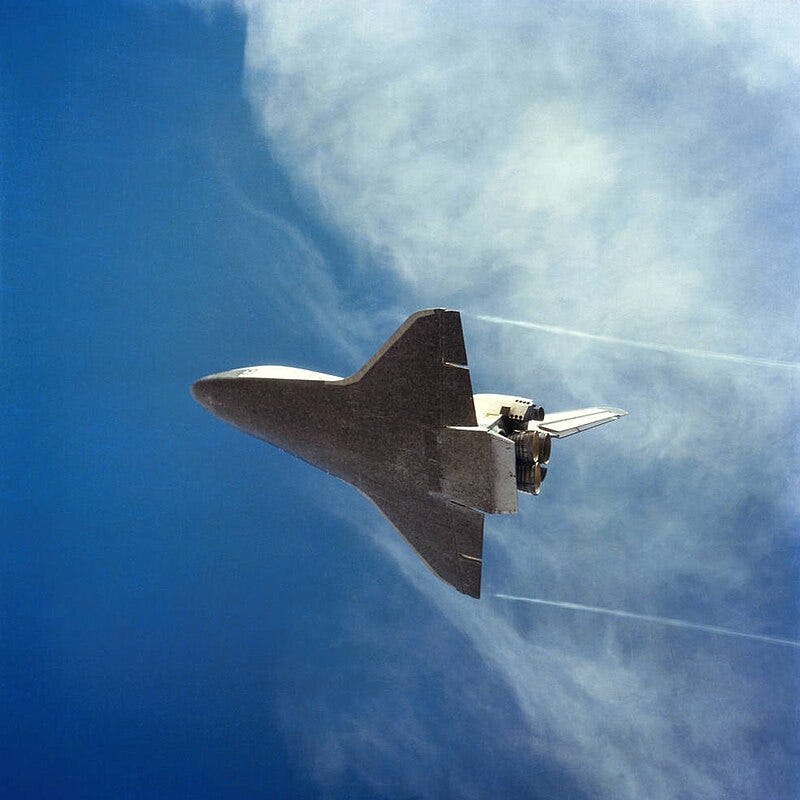
The Space Shuttle hasn’t been operational for around fourteen years now, so this wasn’t initially intuitive to me.
The Space Shuttle certainly was not a perfect program, but it left a lasting impression on the American psyche.
Despite its atrocious safety record and failure to meet several operational objectives, the Space Shuttle remains in the cultural zeitgeist nearly a decade and a half after retirement. It seems to resonate with the public in a way that’s comparable only to the first moon landing.
Heck, it seems to resonate with the public more than the upcoming Moon mission, as Peter Hague tweeted earlier this week:
The Artemis II mission has surprisingly little footprint in the public consciousness outside of people already interested in space. Part of this is NASA having spotty PR at the best of times, and them not being able to do any promotion of it at all during the shutdown.
But still, it’s odd how little anybody cares. I guess it isn’t helped by the fact that a lot of people who do care and know details about the mission, and would be telling the world about it, have doubts about the hardware.
Part of the love for the Space Shuttle is probably recency bias — the Space Shuttle is the most recent retired crewed American spacecraft.
Some of this is also likely attributable to the larger crew capacity of the orbiter. This was intentional. The Space Shuttle program planned to take normal American citizens to space for the first time, as the first step to creating a truly spacefaring civilization. The plan was to start by taking people like teachers, journalists, and legislators to space.
I write Molding Moonshots in a personal capacity.
If you are building in deep tech and thinking about raising pre-seed, seed, or Series A funding, I’d be more than happy to have a chat on professional terms!
Send me an email and we can find a time.
I’m also thoroughly convinced that the unique design of the vehicle played a role.
Looking up at the orbiter, there’s one thing about it that’s impossible to ignore. The Space Shuttle had wings.
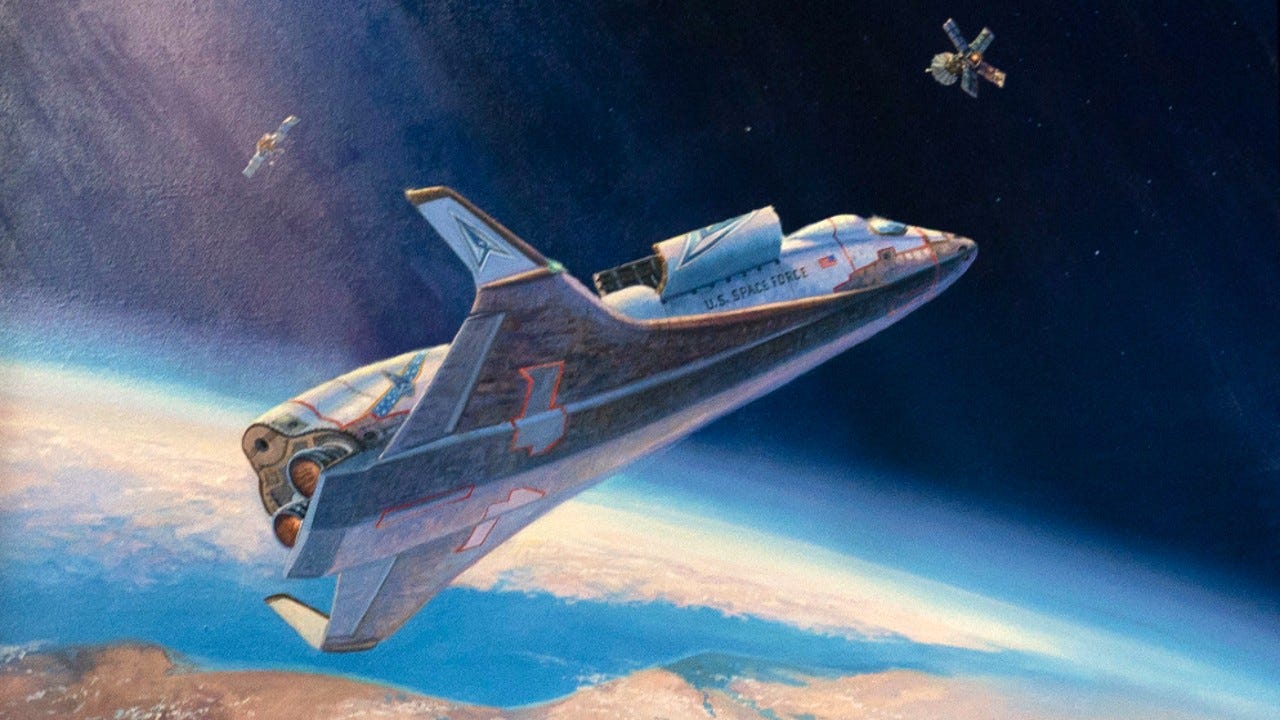
This is a rare design characteristic for a crewed, orbital spacecraft design. Both before and after the Shuttle, astronauts depart for space on rockets and return under parachute canopies.
Both riding a rocket up and a parachute down fall far outside the “normal person event” context window of an average person. Most people aren’t hobbyist or professional parachutists, and riding a rocket is even more rare. That showed in how people treated early astronauts — they were understood as heroic figures.
The Shuttle couldn’t get away from the rocket, but it landed like a glider on a runway. This made the whole architecture much more relatable to the average American. Back in the ‘80s, flying on a plane may not have been a universal experience, but it was by no means uncommon.
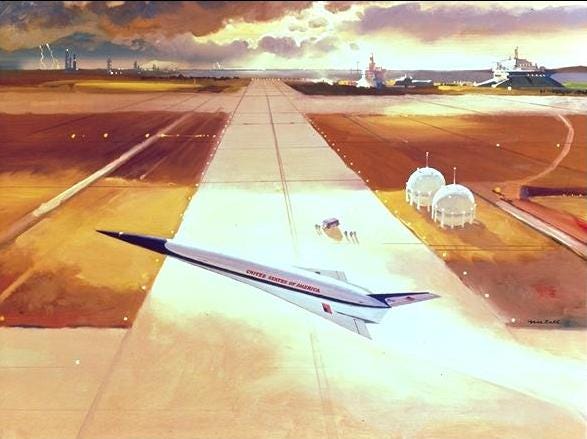
What wings gave the orbiter were both an impression of uniqueness compared to the prior art, and a sense of familiarity to the person off the street learning about it for the first time.
The other thing the wings did is that they made the Space Shuttle the world’s first refurbishable spacecraft. It wasn’t reusable as-is, because some parts were discarded, and a lot of very labor-intensive inspections were necessary between flights. But the idea of a winged spacecraft that went through inspections and then flew again was culturally quite familiar back in the 1980s.
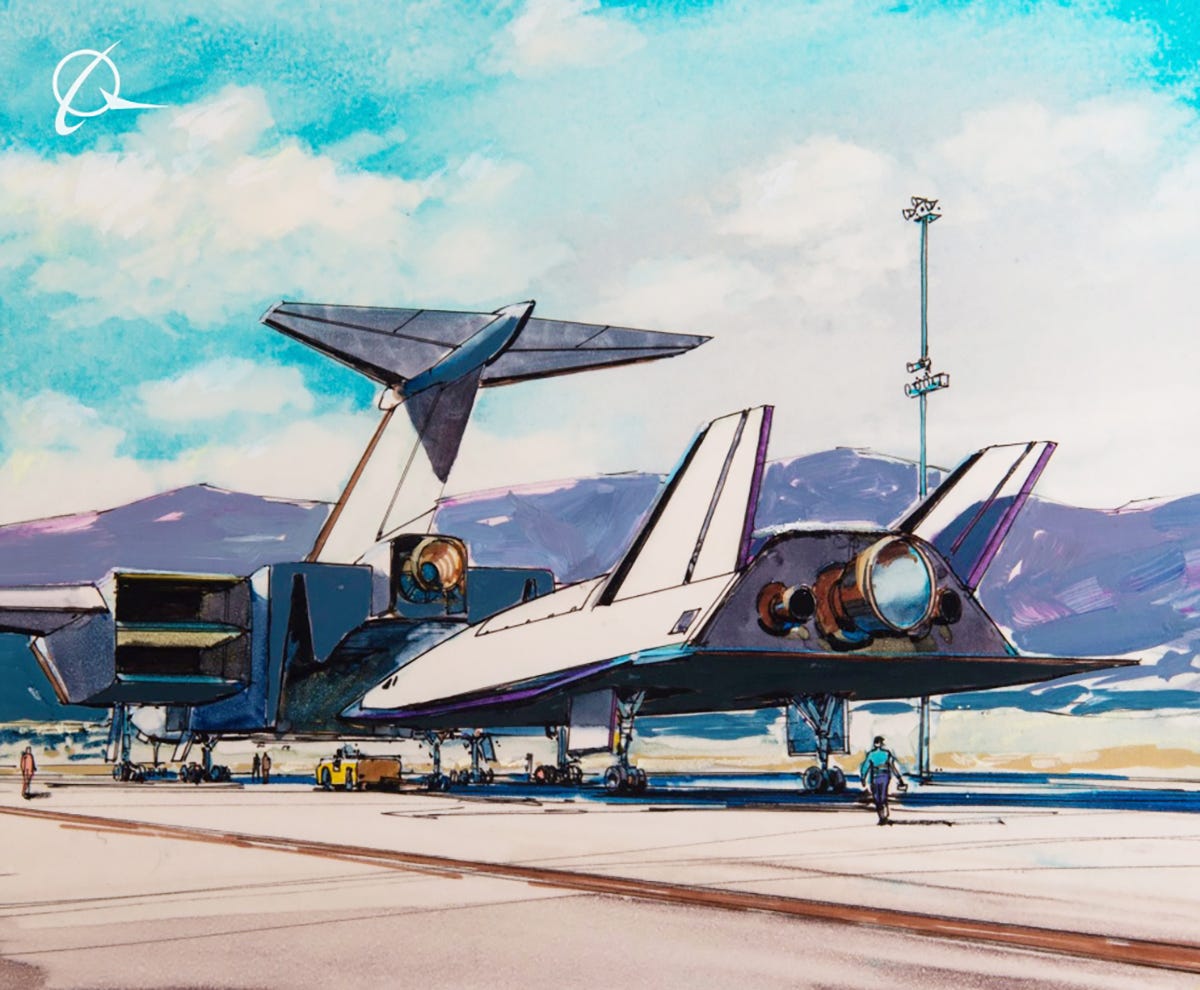
What I can’t quite get away from is how the orbiter managed to be both radically new in its engineering and at the same time, quite culturally relatable (if not to its direct users, then to the people in society who paid for it).
I think this helped Space Shuttle develop cultural stickiness.
A continuous cultural presence comes across to me as important to building successful companies — and particularly important outside deep tech, where branding and virality might have a bigger impact on purchasing decisions.
I recall reading about where this started. Originally, the first orbiter was going to be named Constitution, but a campaign of Star Trek fans wrote in to the White House and convinced President Ford to have NASA rename the vehicle Enterprise (after the fictional starship).
I can see that cultural stickiness remained quite important, but I’m still struggling to understand just how it was maintained for more than thirty years. If you’ve got thoughts as to how the Space Shuttle program accomplished this, please let me know in a comment below!
The Space Shuttle also comes across as a strong model for startups specifically building in deep tech.
It was a novel technical project, where the engineering developments enabled something totally new and also made the end product more relatable to the general public than the state of the art.
I hope the deep tech founders I meet with are planning for something like it as part of their long term vision.
While an initial product, or set of products might be focused on a small set of users, really successful startups have a vision that eventually impacts the general public. This is true even in emerging technologies, and even in companies that are initially focused on selling to other businesses.
Here’s a list of companies at various stages on that journey today, starting with the company whose product has been used by the most people:
Open AI (AI)
Tesla (electric cars)
Waymo (self-driving cars)
Figure AI (humanoid robots)
Boom (supersonic aircraft)